
What Is SWL in Crane?
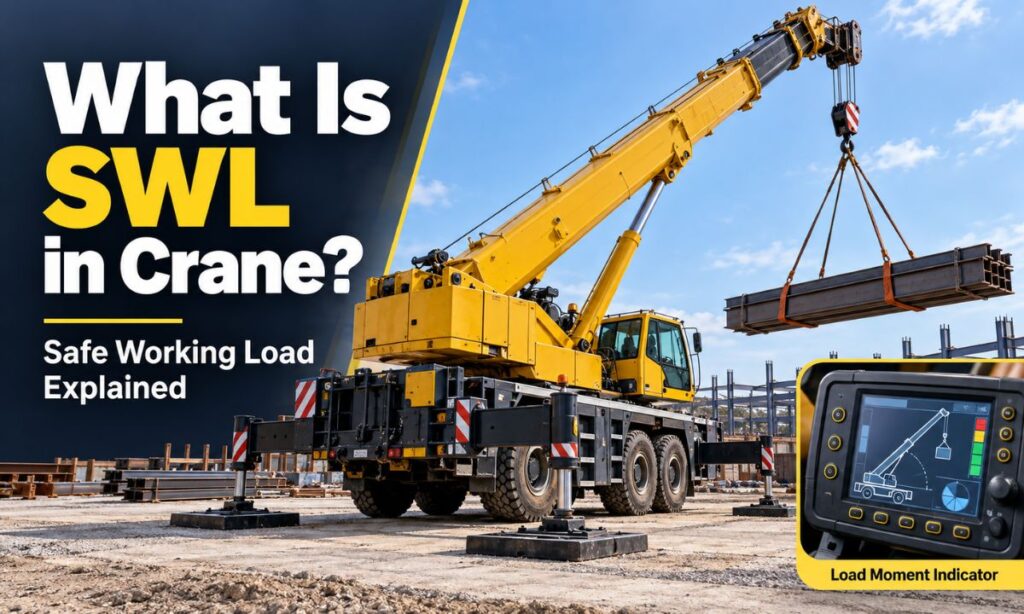
SWL stands for Safe Working Load, which means the maximum load a crane can safely lift in a specific working configuration. A Load Moment Indicator helps the operator monitor the load against the crane’s rated lifting capacity. However, safe lifting involves more than checking the weight of an object. The crane’s boom position, lifting distance, and setup also affect how much it can lift safely.
What Does Safe Working Load Mean?
Safe Working Load tells operators the allowed lifting limit for the equipment under stated conditions. It should never be treated as a rough estimate or a target that can be slightly exceeded. Before lifting, the operator needs to confirm the load weight and check the crane’s capacity for the planned position. Lifting accessories, such as slings and shackles, also have their own working load limits.
A Load Moment Indicator supports this process by showing information about the crane’s current lifting conditions. Depending on the system, its display may include load weight, boom angle, boom length, working radius, and available capacity. This information helps the operator recognise when a lift is approaching a limit. The device supports the operator’s decisions, but it does not replace a properly planned lift.
Why Does a Crane’s Lifting Capacity Change?
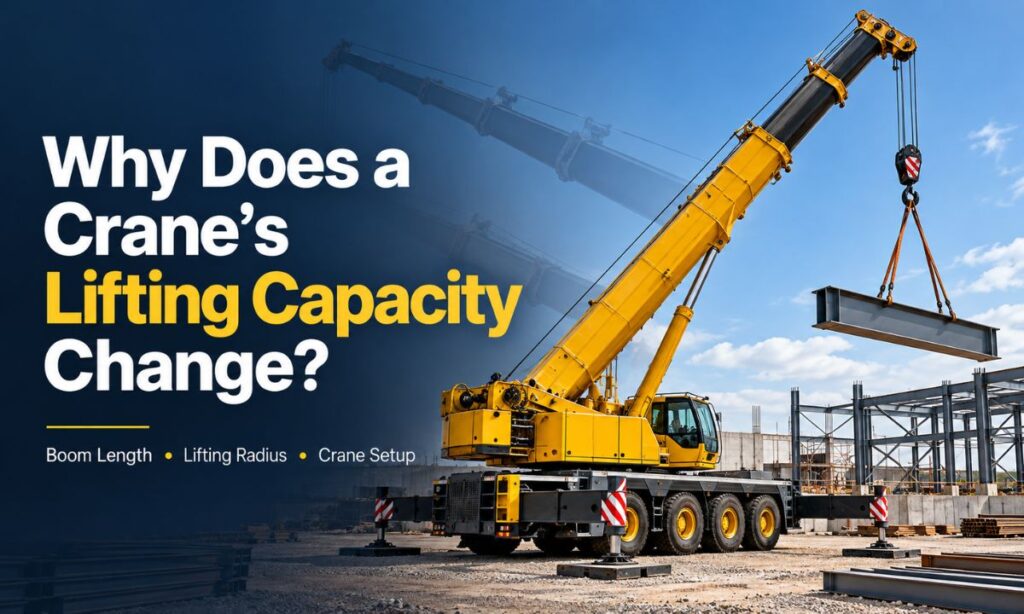
A crane’s maximum advertised capacity does not apply to every lift. For example, a crane described as a 50-tonne crane cannot necessarily lift 50 tonnes with its boom fully extended. Its capacity depends on the exact configuration listed in the manufacturer’s load chart. Boom length, working radius, counterweight, lifting direction, and outrigger position can all affect the permitted load. Operators must use the chart for their actual setup.
A Load Moment Indicator helps operators monitor these changing conditions. One important factor is the lifting radius: the horizontal distance between the crane’s centre of rotation and the vertical line of the suspended load. As this distance increases, the same load creates a greater turning effect on the crane. This is why a load that is within capacity close to the crane may exceed capacity farther away.
A Simple Example of SWL in Crane
Imagine that a crane’s load chart allows a load of 10 tonnes at one working radius and 6 tonnes at a greater radius. An 8-tonne load would be within the first limit but above the second. The object has not become heavier; the lifting position has changed. These numbers are only an example. Operators must always use the actual load chart rather than applying figures from another crane.
How Does a Load Moment Indicator Work?
A Load Moment Indicator uses sensors and stored crane capacity information to monitor lifting conditions. The sensor arrangement varies between systems. Some equipment uses boom length and angle sensors, along with pressure measurements, to calculate relevant lifting information. The system compares those conditions with the capacity data for the selected crane configuration. Correct setup matters because an incorrect configuration can produce misleading information on the display.
When the crane approaches or exceeds a defined limit, the system may provide visual and audible warnings. Equipment with a limiting function may also restrict certain movements that would worsen the overload condition. However, not every indicator has the same features. Operators should understand the installed system’s warnings, limitations, and controls by following its manual, rather than assuming every device automatically stops an unsafe movement.
What Is a Safe Load Indicator?
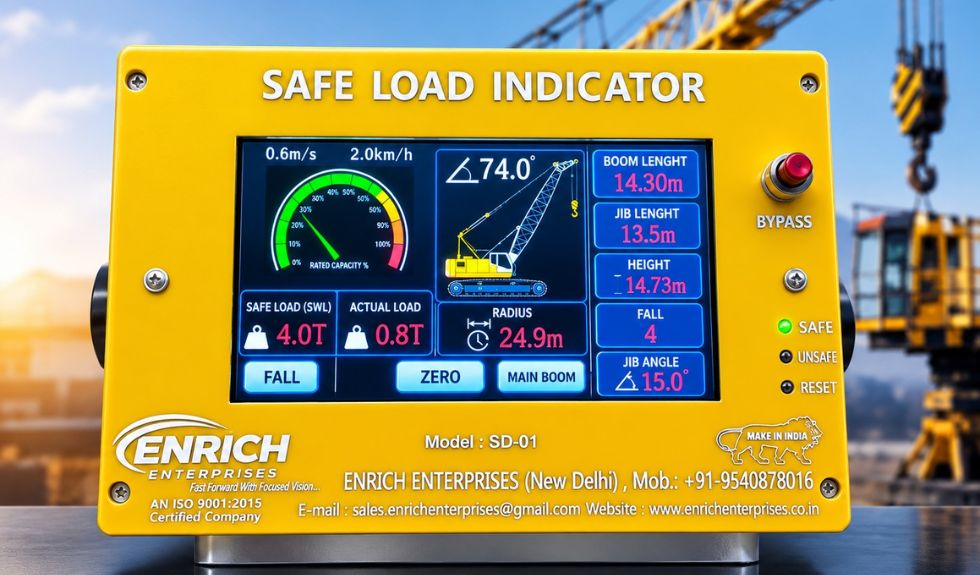
A Load Moment Indicator and a Safe Load Indicator are terms commonly used for crane monitoring equipment. Manufacturers may use different names for systems with overlapping functions, including rated capacity indicators and rated capacity limiters. However, the product name alone does not establish what a system can do. Its specifications should explain what it measures, which warnings it provides, and whether it controls any crane movements.
When choosing a Safe Load Indicator, check whether it is suitable for the crane model and its operating configurations. A display that shows load weight alone may not provide the same information as a system that also considers working radius and capacity data. Installation, configuration, maintenance, and calibration requirements also matter. The right equipment should match the crane and the manufacturer’s requirements, rather than simply offer a clear screen.
What Should Operators Check Before Lifting?
A Load Moment Indicator should be checked according to the manufacturer’s instructions before use. The operator also needs to confirm the load weight, crane configuration, lifting radius, and applicable load chart. Ground support, crane level, and outrigger setup must be suitable for the planned operation. A reading within the displayed capacity does not confirm that every other part of the lifting arrangement is safe.
The weight calculation must also account for lifting equipment. Hook blocks, slings, shackles, spreader beams, and other attachments may require deductions from the chart capacity, depending on the manufacturer’s instructions. For instance, a load weighing five tonnes does not necessarily represent the entire suspended weight. Missing these additional weights can lead to an incorrect capacity assessment, even when the object itself has been weighed accurately.
Common Mistakes When Using SWL
A Safe Load Indicator cannot compensate for using the wrong load chart or entering an incorrect crane setup. Other mistakes include assuming that a previous successful lift proves the next one is safe, ignoring changes in working radius, and continuing after a warning without investigating it. Assess each lift against its actual conditions. A small change in position can affect the available lifting capacity.
Another mistake is treating SWL as the crane’s breaking point. It is an operating limit, not permission to test how much extra weight the equipment can hold. Operators should also avoid bypassing warning devices or relying on the display instead of checking the load chart. Safe lifting requires suitable equipment, trained people, proper planning, and compliance with the crane’s operating instructions.